Congratulations on your upgraded pool. You have likely spent weeks dealing with noise, dust, and construction crews, but seeing that fresh finish makes it all worthwhile.
We know the temptation to jump right in is strong.
But waiting is the only way to protect your pool resurfacing investment. The first 30 days determine the lifespan and texture of your pool surface for the next 15 years.
This guide breaks down exactly how to manage the critical curing process.
The First 48 Hours: Critical Filling Protocols
The initial hydration reaction of your new surface generates heat and requires constant submersion. Interrupting this process can lead to “hydration lines” or permanent structural checking.
Continuous Water Flow
We instruct every homeowner to start filling immediately and never stop until the water hits the tile line.
The “Sock” Trick: Wrap a clean sock or cloth around the hose nozzle before placing it in the pool. This simple barrier prevents the metal end from resting directly on the fresh plaster, which can leave a permanent rust ring or impression.
Important filling rules:
- Do not turn off the water: Even if you go to sleep or leave for work.
- Use the main fill line: Do not use soft water loops or fire hoses.
- Watch the level: Stop exactly at the middle of the tile line.
Zero Traffic Zone
The surface material is still soft and pliable at this stage. Stepping on the floor can leave footprints, while dog claws can create deep gouges that will harden permanently.
Chemical Prohibition
We strictly forbid adding chlorine, acid, or salt during the fill.
Adding chemicals to a partially filled pool concentrates them in the deep end. This chemical heaviness creates a “bath-tub ring” stain that is nearly impossible to remove without acid washing.
Days 3-7: The Start-Up Phase
Once the water reaches the middle of the tile line, the real work begins. We call this the “Start-Up,” and it follows the National Plasterers Council (NPC) guidelines for proper hydration.
The Brushing Mandate
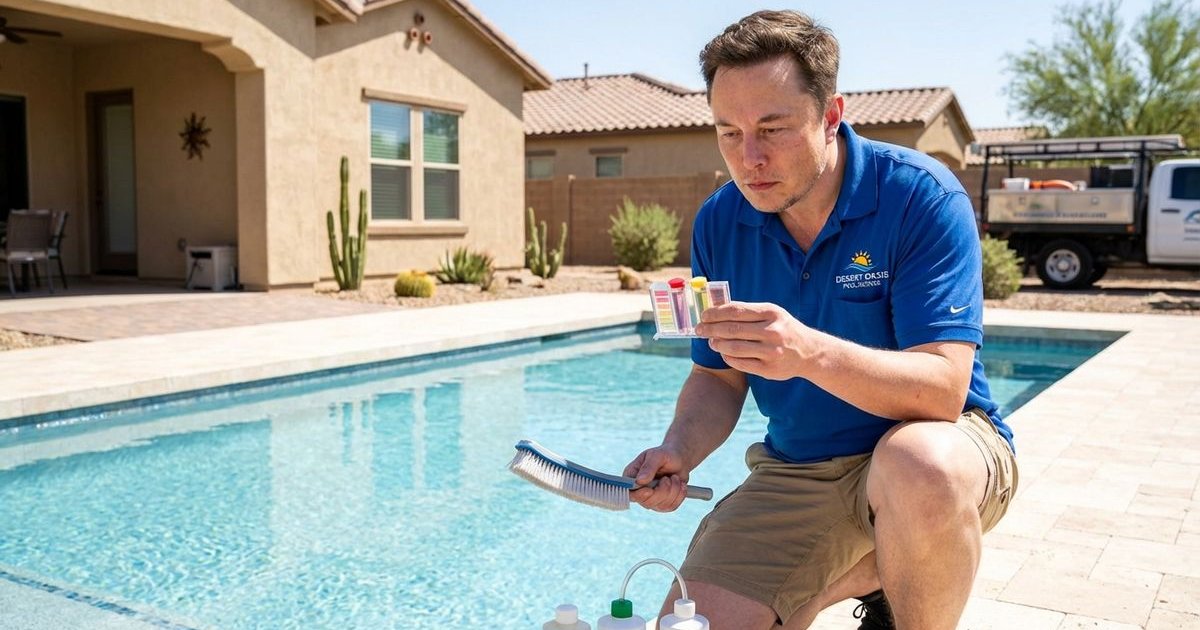
You must brush the entire pool surface twice a day for the first week.
This physical agitation is not about cleaning debris. It is about smoothing the surface.
Why this action saves your finish:
- Removes Plaster Dust: The curing process releases calcium hydroxide (plaster dust).
- Prevents Scaling: If dust settles and hardens, it creates a sandpaper-like texture.
- Ensures Smoothness: Regular brushing compacts the surface, making it smoother and more durable.
Your Equipment: Only use a standard nylon pool brush. Do not use a steel-bristle brush or a wheeled vacuum head, as these will tear the uncured surface.
Initial Chemical Treatment
Our technicians typically handle the “hot start,” but you should understand what is happening.
The pH Spike: Fresh plaster has a very high pH (often 12.0+), which is highly alkaline. We add significant amounts of Muriatic Acid to bring this down to a neutral 7.4.
The Metal Sequestrant: This chemical acts as a magnet for metals in the water, such as copper or iron. It keeps them suspended in the water so they filter out rather than staining your bright new white or blue finish.
Sanitization: We use liquid chlorine exclusively during this week. Granular shock or tablets can settle on the bottom and burn a bleach mark into the color.
Filtration Requirements
Keep your pump running 24 hours a day for the first 7 days.
The water will likely look cloudy or milky. This is normal. The filter is trapping the plaster dust you are brushing up.
Days 8-30: The Curing Continuation
The surface is still hardening, though the most critical chemical reactions have slowed.
Adjusted Brushing Schedule
You can reduce the frequency of your maintenance now.
The Plan:
- Week 2: Brush once daily.
- Week 3: Brush every other day.
- Week 4: Spot brush as needed.
Chemistry Targets (The LSI Factor)
Water balance involves more than just pH. We focus on the Langelier Saturation Index (LSI), which balances pH, alkalinity, calcium, and temperature.
Target ranges for the first month:
| Parameter | Ideal Range | Why It Matters |
|---|---|---|
| pH | 7.2 - 7.6 | High pH causes scale; low pH etches plaster. |
| Alkalinity | 80 - 120 ppm | Acts as a buffer to keep pH stable. |
| Calcium Hardness | 200 - 400 ppm | Prevents water from “eating” the calcium in your plaster. |
| Chlorine | 1.0 - 3.0 ppm | Keeps water sanitary without bleaching the surface. |
| Cyanuric Acid (CYA) | 30 - 50 ppm | Protects chlorine from the sun. |
Pro Tip: Test your pH daily. New plaster naturally drives pH up constantly for about 28 days.
Equipment Restrictions
We advise keeping specific automated tools offline until Day 31.
- Wheeled Cleaners: The wheels can leave tracks in the soft surface.
- Heaters: Plaster dust can coat the copper heat exchanger, ruining the heater.
- Salt Systems: Salt cells are sensitive. High plaster dust levels can destroy a $600 salt cell in days.
- Dosing Systems: Automatic acid feeders may overdose the pool if the probe gets dirty.
Addressing Common Start-Up Variations
You may notice cosmetic changes during the first month. Most are normal parts of the hydration process.
Surface Mottling
Slight color variations or “mottling” look like gray blotches.
This phenomenon occurs as different areas of the pool hydrate at different rates. It typically evens out significantly by day 30, much like wet concrete drying on a sidewalk.
The “Plaster Dust” Cloud
You might see white powder kicking up when you brush.
This confirms you are doing a good job. It means the dust is loose and can be filtered out. If you didn’t see dust, it would mean it stuck to the floor.
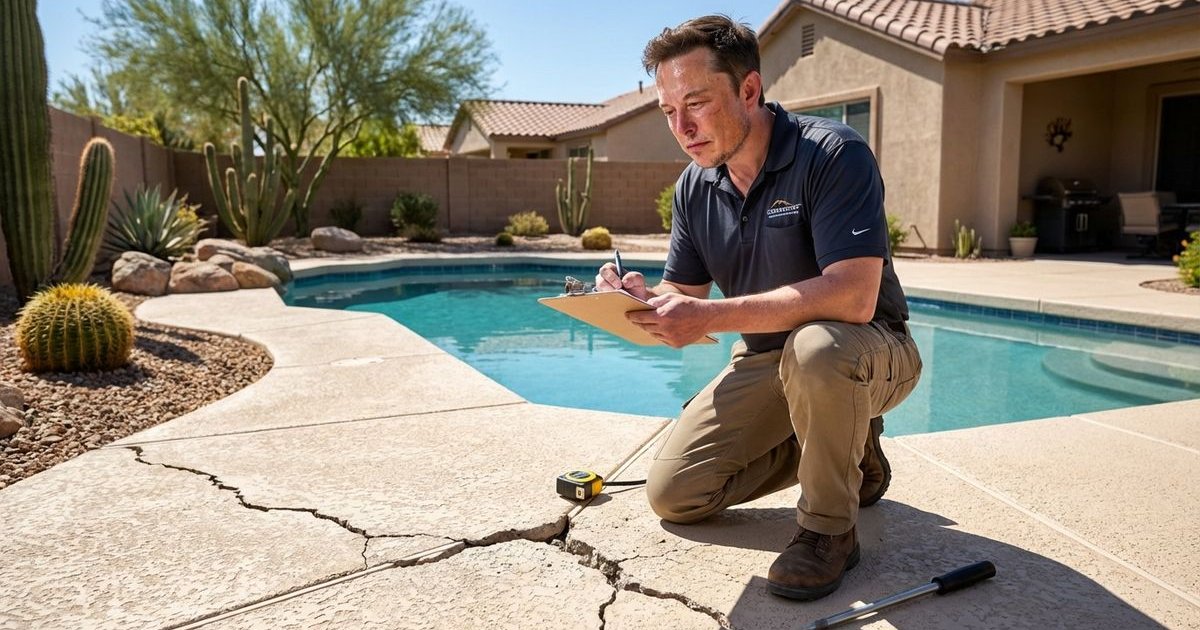
Small Cracks (Check Cracking)
Tiny, hairline cracks may appear in steps or benches.
These are usually superficial shrinkage cracks known as “crazing.” They rarely leak and are a cosmetic characteristic of cement-based products.
After 30 Days: Operational Normalcy
Congratulations, your surface is cured.
We give you the green light to return to standard pool operations.
Checklist for Day 31:
- Install Cleaners: Put your suction or robotic cleaner back in the pool.
- Add Salt: If you have a saltwater pool, pour the salt now (brush it until dissolved).
- Calibrate Heater: You can now fire up the heater or heat pump.
- Backwash Filter: Give the filter a final deep clean to remove the last of the plaster dust.
Long-Term Preservation Strategy
Arizona water is notoriously hard, which poses the biggest threat to your pool surface over time.
The Calcium Battle
Our local tap water often comes out of the ground with 250+ ppm of calcium.
As water evaporates (up to 8 feet per year in Phoenix), pure water leaves, but the calcium stays behind.
The fix: You must test calcium hardness monthly. When it exceeds 800 ppm, you risk scaling that creates a rough, sandpaper finish. Partially draining and refilling the pool every 2-3 years is the only way to lower calcium levels effectively.
Surface-Specific Maintenance
Different finishes require slightly different approaches to maximize their lifespan.
Comparison of care needs:
| Surface Type | Lifespan Estimate | Maintenance Focus |
|---|---|---|
| Standard Plaster | 7-10 Years | Keep pH strict (7.4). Highly sensitive to acid. |
| Quartz Aggregate | 10-15 Years | More durable, but brushing prevents streaking. |
| Pebble / Mini-Pebble | 15-20+ Years | Most forgiving. Needs periodic calcium scale removal. |
Preventive Inspection
Small issues become expensive repairs if ignored.
We suggest walking the perimeter of your pool once a month. Look for loose tiles, mastic (deck seal) separation, or small delaminations (hollow spots) on the steps.
Need Expert Guidance?
The start-up process can feel overwhelming, but adhering to these rules ensures you get the full value out of your new surface.
We are ready to answer any questions about chemistry, timing, or equipment.
Contact us or call (602) 619-1234.