You plan to swim year-round in Arizona, but the desert winter has other plans. We know the frustration of looking at a pristine pool in January that is simply too cold to enjoy. A reliable heater changes that dynamic entirely.
The choice between gas, electric heat pumps, and solar isn’t just about the equipment price tag. It comes down to how you actually use your pool and the specific utility rates here in the Valley.
We have guided countless Phoenix homeowners through this decision during pool equipment installation projects. This comparison breaks down the real-world costs and performance you can expect right now.
Quick Comparison: The 2026 Snapshot
| Heater Type | Best For | Installed Cost (Est.) | Monthly Run Cost |
|---|---|---|---|
| Gas (Natural/Propane) | Spas, weekends, holidays | $3,500 - $5,500 | High ($300+) |
| Electric Heat Pump | Consistent daily use | $5,000 - $8,500 | Low ($50-$120) |
| Solar Systems | Season extension (Mar-Nov) | $4,500 - $8,000 | Near Zero |
Gas Pool Heaters
How They Work and Performance
Gas heaters burn natural gas or propane inside a combustion chamber to heat copper fin tubes. Water passes through these tubes and picks up heat rapidly.
A 400,000 BTU unit can raise the temperature of a 15,000-gallon pool by one to two degrees per hour. This speed makes gas the undisputed king of on-demand heating.
The “Insider” Pros
- Speed is unmatched: You can decide on Friday morning to swim Friday night.
- Independent of weather: These units deliver full heat output even if it is 35°F and raining outside.
- Compact footprint: New low-NOx models from brands like Pentair or Hayward take up minimal equipment pad space.
The Real-World Cons
- Operating costs are steep: Running a gas heater is like driving a truck with a hole in the gas tank.
- Efficiency limits: Standard units are only about 82-84% efficient, meaning 16 cents of every dollar goes right out the exhaust vent.
- Maintenance requirements: The heat exchanger is prone to calcium buildup if your water chemistry fluctuates.
Best Suited For
- Homeowners who only swim on weekends or holidays.
- Attached spas that need to go from 60°F to 102°F in 30 minutes.
- Properties with existing, properly sized gas lines.
Arizona Operating Cost Reality
Natural gas prices fluctuate, but you should expect significant bills during winter use.
Based on current local rates:
- Daily Cost: $15 to $25 to maintain temp.
- Event Cost: $40 to $60 to heat a pool from cold for a single weekend.
Heat Pump Pool Heaters
How They Work
Heat pumps do not generate heat; they move it. A fan pulls in warm ambient air, and a compressor intensifies that heat to transfer it into your pool water.
This process is incredibly efficient because it uses electricity only to run the fan and compressor, not to create the heat itself.
The “Insider” Pros
- Coefficient of Performance (COP): For every $1 of electricity you spend, you get $5 to $6 worth of heat.
- Longevity: Without the stress of combustion, titanium heat exchangers often last 10 to 15 years.
- Dual function: Some models, like the Pentair UltraTemp, can also cool your pool during those 115°F July weeks.
The Real-World Cons
- Slow reaction time: Bringing a pool up to temperature takes days, not hours.
- The “Cold Snap” limit: Efficiency drops drastically when air temperatures fall below 50°F.
- Electrical load: You need a dedicated 50 or 60-amp breaker, which might require a main panel upgrade.
Best Suited For
- Families who want the pool ready to use 24/7.
- Phoenix winters where daytime highs rarely stay below 55°F for long.
- Homeowners on solar electric plans looking to leverage excess credits.
Arizona Operating Cost Reality
Electricity is generally more stable than gas prices in Maricopa County.
Typical costs for a 15,000-gallon pool:
- Monthly (Winter): $60 to $120 to maintain 82°F.
- Comparison: This is often 70% cheaper than operating a gas heater for the same period.
Solar Pool Heaters
How They Work
Your pool pump pushes water up to a series of black polypropylene tubes on your roof. The sun heats the water as it flows through the matting before gravity returns it to the pool.
We often describe this as the only heater that pays for itself, usually within three to four years.
The “Insider” Pros
- Zero fuel cost: The sun sends no bill.
- Legal protection: In Arizona, HOAs generally cannot prohibit solar energy devices due to state statutes (A.R.S. § 33-1816).
- Durability: Modern panels are tough and resist UV degradation well.
The Real-World Cons
- Roof real estate: You need a collector area equal to at least 80-100% of your pool’s surface area.
- Weather reliance: A week of cloudy monsoon weather means a cold pool.
- Aesthetics: Some homeowners dislike the look of large black mats on their tile roofs.
- Cooling limitation: While they heat well, they cannot effectively cool the pool in summer like a reversible heat pump.
Best Suited For
- Extending the swim season to March through November.
- Eco-conscious homeowners committed to reducing their carbon footprint.
- Pools with large, south-facing roof sections.
The Arizona Advantage
Our local climate creates a specific hierarchy for heating options that differs from the rest of the country.
Mild Winters
The average daily high in Phoenix during January is around 67°F. This is the “sweet spot” for heat pumps, allowing them to operate at peak efficiency when heaters in the Midwest would be frozen solid.
Solar Intensity
Arizona receives over 3,800 hours of sunshine annually. Solar systems here outperform identical systems installed in Florida or California simply due to solar irradiance.
Low Humidity vs. Evaporation
Dry air causes rapid evaporation, which cools your pool. While our climate is great for heating, you must use a pool cover. Without one, you will lose 50% of your heat to the night sky, regardless of which heater you buy.
Hybrid Approach: The Ultimate Solution
We frequently install systems that combine technologies for the best of both worlds.
Solar + Gas
The solar system handles the bulk of the heating load during the shoulder months (March-May, September-November). The gas heater waits on standby to fire up only for the spa or during the coldest weeks of January.
Solar + Heat Pump
This is the most energy-efficient combination possible. Solar provides the baseline heat during the day. The heat pump takes over at night or during cloudy stretches to maintain a perfect 82°F without touching a fossil fuel source.
Installation Considerations
Gas Heater Requirements
- Gas Meter Size: Many older homes have meters that cannot support a 400k BTU heater plus home appliances. An upgrade from Southwest Gas may be required.
- Venting: Proper clearance from windows and overhangs is critical for safety.
Heat Pump Requirements
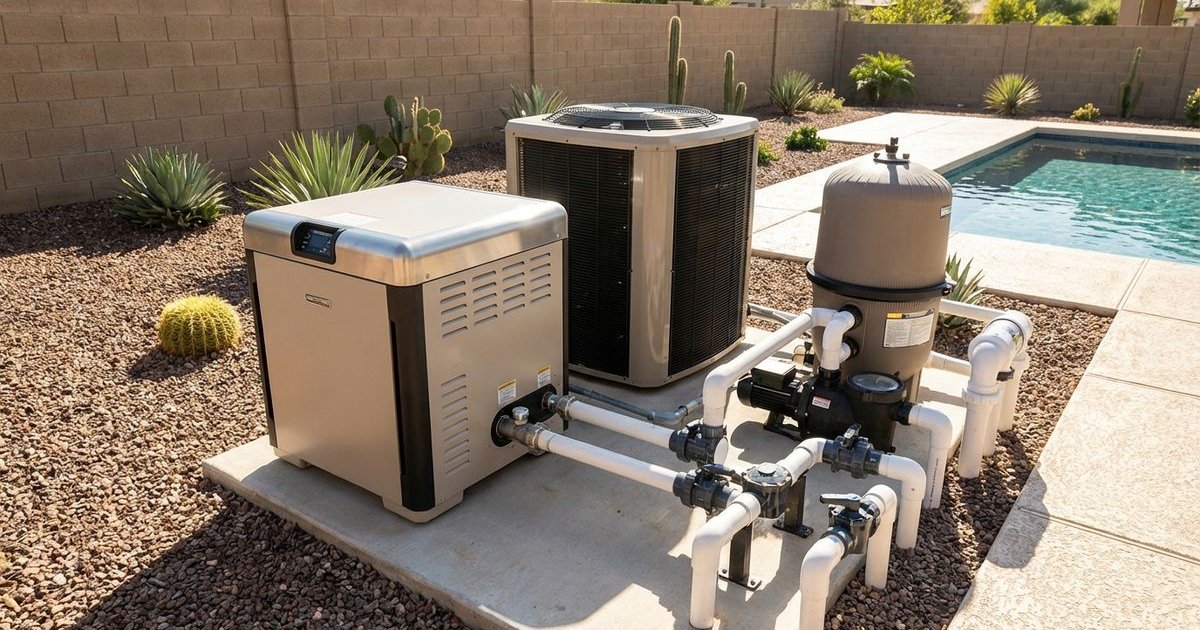
- Airflow: The unit needs about 2-3 feet of clearance on all sides to pull in air.
- Electrical: A certified electrician must verify your panel can handle the sustained amperage draw.
Solar Requirements
- Roof Condition: Never install solar on a roof that needs replacing in the next 3-5 years.
- Plumbing: Requires running 2-inch PVC pipes up the side of your home, which may need painting to match your stucco.
Making Your Decision
Choose Gas If:
- You use a spa frequently but the pool rarely.
- You want the ability to heat the pool for a specific party on short notice.
- Your home has limited electrical panel capacity.
Choose a Heat Pump If:
- You want a “set it and forget it” warm pool all winter.
- You have solar panels on your home generating cheap electricity.
- You dislike the idea of burning fossil fuels.
Choose Solar If:
- You are okay with swimming 8 or 9 months a year instead of 12.
- You have ample south or west-facing roof space.
- Your primary goal is zero monthly operating costs.
Our Recommendation for Arizona
For 90% of the Phoenix pools we service, the Electric Heat Pump is the superior choice.
The technology has matured to the point where the operating costs are reasonable, and the noise levels are lower than your pool pump itself. It aligns perfectly with our mild winter temperatures.
Secondary Option: If you have an attached spa, a Gas Heater is still necessary for that rapid heat-up time.
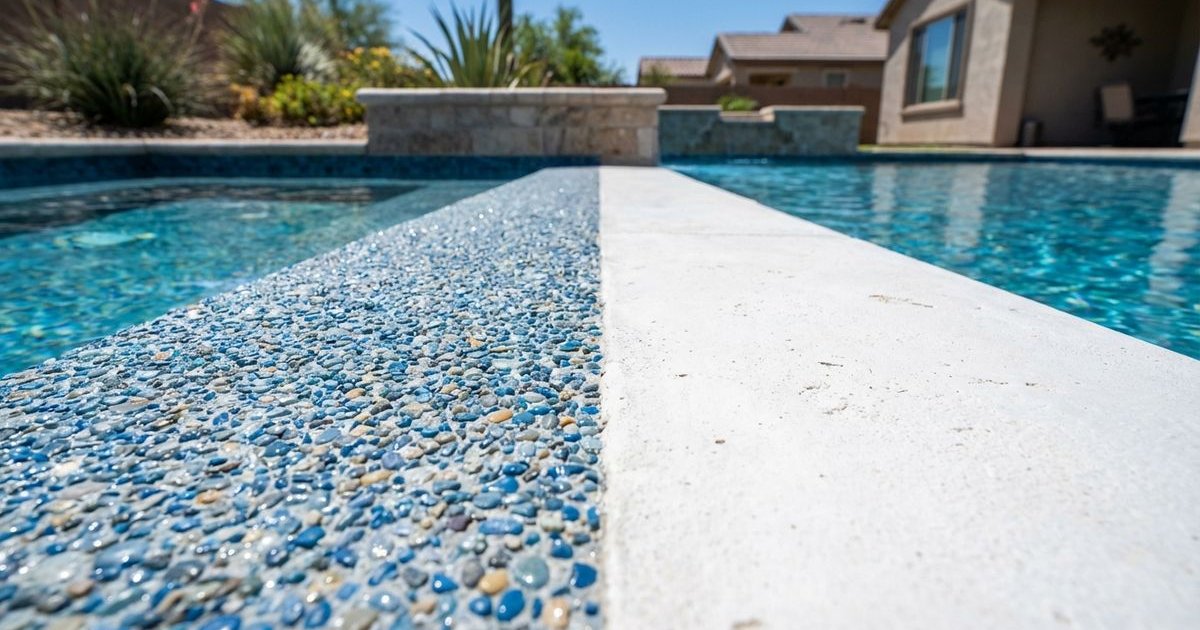
Important Note for New Surfaces: If you are resurfacing your pool with us, remember that you cannot use any heater for at least 28 days after the new finish is applied. This curing period is critical for the long-term durability of your plaster or pebble.
Need Help Deciding?
We are happy to evaluate your current equipment pad, check your gas or electrical capacity, and recommend the solution that fits your budget.
Contact us or call (602) 619-1234 for a free consultation.