The Arizona sun is relentless, and unfortunately, your pool’s interior finish bears the brunt of that intensity. We know that spotting the exact moment a pool needs resurfacing can be tricky for homeowners. Over the years, countless Phoenix residents have asked us if their pool is simply dirty or if the material itself is failing.
Our team at David Resurface has inspected thousands of pools across the Valley, and we’ve seen how quickly cosmetic issues can turn into structural nightmares. A standard plaster surface in our climate typically lasts 7 to 10 years before showing serious fatigue. Waiting too long to address these warning signs often leads to more expensive repairs down the road.
We have compiled the seven most reliable indicators that your pool is due for a new surface. This guide will help you distinguish between a simple maintenance issue and a sign that your pool needs professional attention.
1. Rough, Sandpaper-Like Surface (The “Pool Toe” Test)
If your children are complaining about scraped toes or snagged swimsuits, your pool surface is actively deteriorating. We often refer to this common abrasive texture as “pool toe,” and it’s a primary indicator that the smooth protective layer has worn away. The roughness occurs because the cement binder in your plaster is dissolving, leaving the sharper aggregate sand exposed.
Why it matters:
- Physical Injury: Constant abrasion causes raw, painful skin on feet and elbows.
- Algae Growth: Rough textures create microscopic valleys where algae spores take root and resist brushing.
- Fabric Damage: Expensive swimsuits and pool toys snag and tear on the jagged surface.
The “Insider” Check: Rub a tennis ball or a soft cloth against the wall of your pool. If it snags immediately or shreds the material, the surface has degraded beyond what a simple acid wash can fix.
2. Visible Staining That Won’t Scrub Off
Surface stains are common, but there is a major difference between surface dirt and permanent discoloration. We look for stains that have penetrated the porous plaster matrix, making them impossible to clean with standard brushing. In Phoenix, specific colors often point to specific chemical imbalances or mineral presence.
Common Arizona Stain Identification:
- Blue-Green/Black/Purple: Often copper staining, likely from eroding heat exchangers or copper-based algaecides.
- Rust/Brown: Typically iron, which can come from lawn fertilizer overspray or corroding rebar.
- White/Grey Nodules: Calcium scaling or “volcanoes,” indicating the plaster is hydrating improperly or water chemistry has been chronically aggressive.
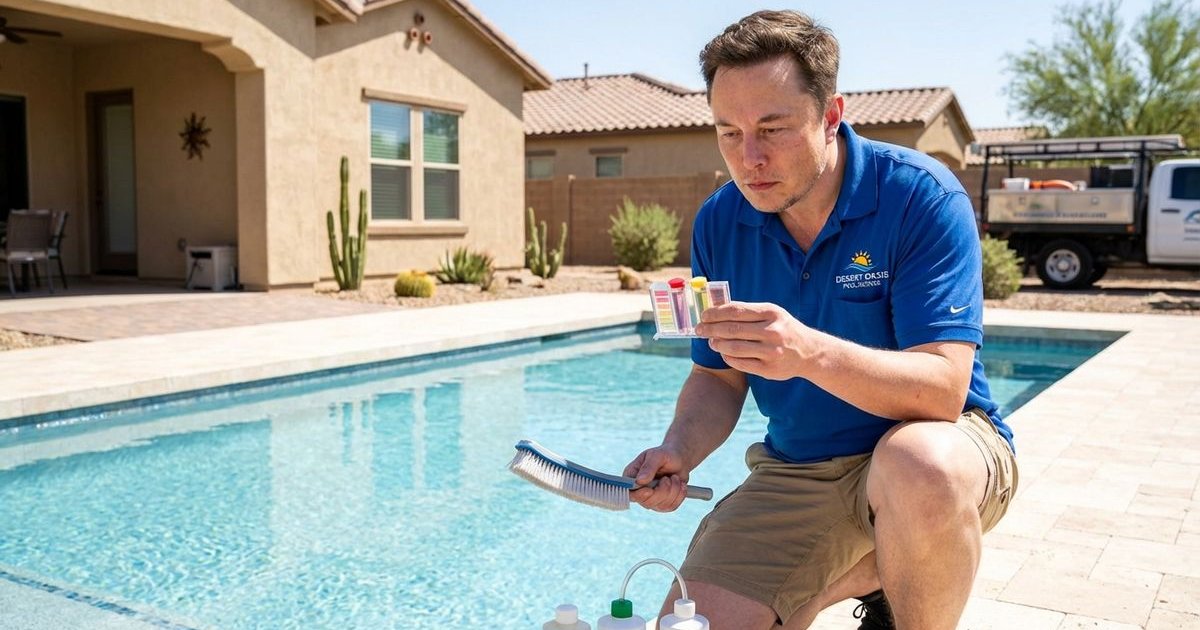
Pro Tip: To check if a stain is metal-based, hold a Vitamin C tablet against the spot for 30 seconds. If the stain lightens or disappears, it’s likely iron-based; if it doesn’t budge, the stain is likely trapped deep within the plaster or is a hydration issue that requires resurfacing.
3. Spiderweb Cracks vs. Structural Cracks
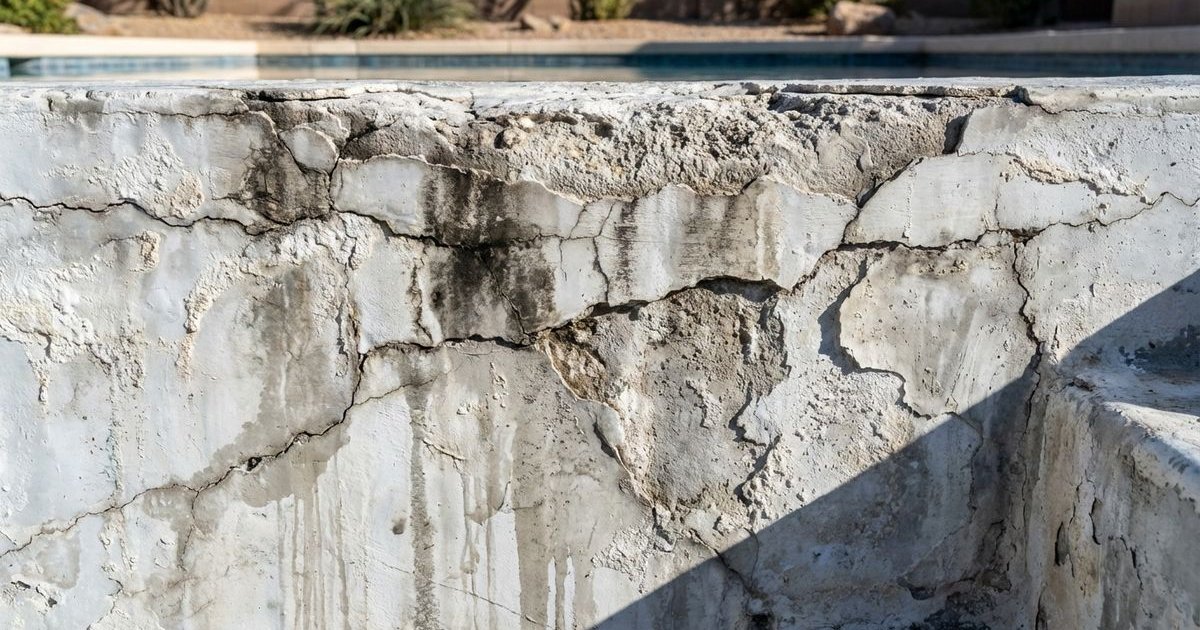
Not all cracks are created equal, but they all signal that the surface is under stress. We categorize surface cracks, often called “crazing” or “check cracks,” as web-like patterns that appear when the plaster shrinks due to temperature shifts or drying. While they start as cosmetic annoyances, they eventually expand.
Why it matters:
- Water Penetration: Even small cracks allow chemically treated water to reach the concrete shell (gunite/shotcrete) beneath.
- Algae Harbors: Black algae loves to settle in these fissures, where it is protected from chlorine.
- Structural Risk: Deep cracks can expose the steel rebar to water, causing it to rust and expand, which literally blows apart the surrounding concrete.
The Dime Test: Take a standard dime and try to insert it into the crack. If the dime fits into the opening, the crack is likely structural rather than just cosmetic, and you should call a professional immediately to prevent leaks.
4. Chalking or Powdering (The Cloudiness Cause)
Run your hand along the underwater surface of your pool wall. If you pull your hand back and see a cloudy white residue on your skin or in the water, your pool is “chalking.” This is a sign that the plaster surface is slowly disintegrating into the water.
Why it matters:
- Filter Clogging: That dissolved dust ends up in your filter, forcing you to backwash or clean cartridges more frequently.
- Water Clarity: Your water will look perpetually hazy, no matter how much clarifier you use.
- Accelerated Wear: You are witnessing the physical loss of your pool’s finish; eventually, the concrete shell will be exposed.
The Chemical Cost: A chalking pool constantly raises the pH and calcium hardness of your water. This forces you to buy and add significantly more muriatic acid just to keep the water balance in check.
5. Difficulty Maintaining Water Chemistry
You might notice that you are buying 30% more chlorine and acid than you did two years ago. We frequently see homeowners fighting a losing battle against their water chemistry because the surface itself is fighting back. As plaster becomes old, pitted, and porous, it absorbs chemicals and provides a breeding ground for contaminants.
The “Money Drain” Effect:
- Chlorine Demand: Bacteria and algae hiding in porous plaster consume chlorine rapidly.
- pH Instability: Decaying plaster releases high-pH material, requiring constant acid adjustments.
- Wasted Time: You spend your weekends testing and dosing rather than swimming.
The Reality Check: If you have replaced your filter and pump but still can’t keep the water clear, the problem is almost certainly the surface of the pool itself.
6. Visible Delamination (The Hollow Spot)
Delamination is the technical term for the plaster layer separating from the underlying gunite shell. We describe this to clients as a “blister” or “bubble” in the pool floor or wall. Over time, these unbonded areas will crack and break off, leaving sharp, jagged holes in your pool.
How to Detect It (The Chain Drag/Tap Test): You don’t always need to drain the pool to find delamination.
- Visual: Look for uneven shadows or slight bulges on the floor, especially near steps.
- Auditory: Take a golf ball or the handle of a screwdriver and gently tap the suspect area (if reachable). Solid plaster makes a “click” sound; delaminated plaster makes a distinct “thud” or hollow sound.
Why it matters: Once delamination starts, it spreads. Patching one spot is often a temporary fix, as the bond failure usually extends far beyond the visible crack.
7. Pool Age and Material Lifespan
Sometimes the sign isn’t a crack or a stain, but simply the calendar. We advise Phoenix homeowners to track the age of their finish against standard lifespan expectations for our desert climate. The intense heat and hard water in Arizona accelerate wear compared to other regions.
Typical Lifespan of Pool Finishes in Arizona
| Surface Material | Average Lifespan | Durability Level |
|---|---|---|
| Standard White Plaster | 7 - 10 Years | Low |
| Quartz Aggregate | 10 - 15 Years | Medium |
| Pebble (e.g., PebbleTec) | 15 - 25 Years | High |
If your pool is approaching these milestones, proactive resurfacing is often cheaper than waiting for a failure that causes leaks or equipment damage.
The Real Cost of Waiting
“It still holds water, so can’t I wait another year?” We hear this question constantly. The answer lies in the hidden costs that accrue while you wait.
Financial Consequences:
- Leak Costs: A structural crack leaking just 1/4 inch of water a day can add $45 to $90 to your monthly water bill.
- Structural Repair: Resurfacing is a maintenance cost; repairing a rusted rebar grid or a cracked shell is a major construction project.
- Chemical Bloat: The extra chemicals needed to treat a failing surface can cost hundreds of dollars per year.
Safety Risks: Rough surfaces cause real injuries, particularly to children’s feet. Additionally, the inability to maintain sanitary water chemistry poses a health risk to everyone who swims.
What Happens During a Professional Assessment
A proper evaluation goes beyond just looking at the pool. We use specific tools and techniques to give you an accurate diagnosis of your pool’s health.
Our Assessment Checklist:
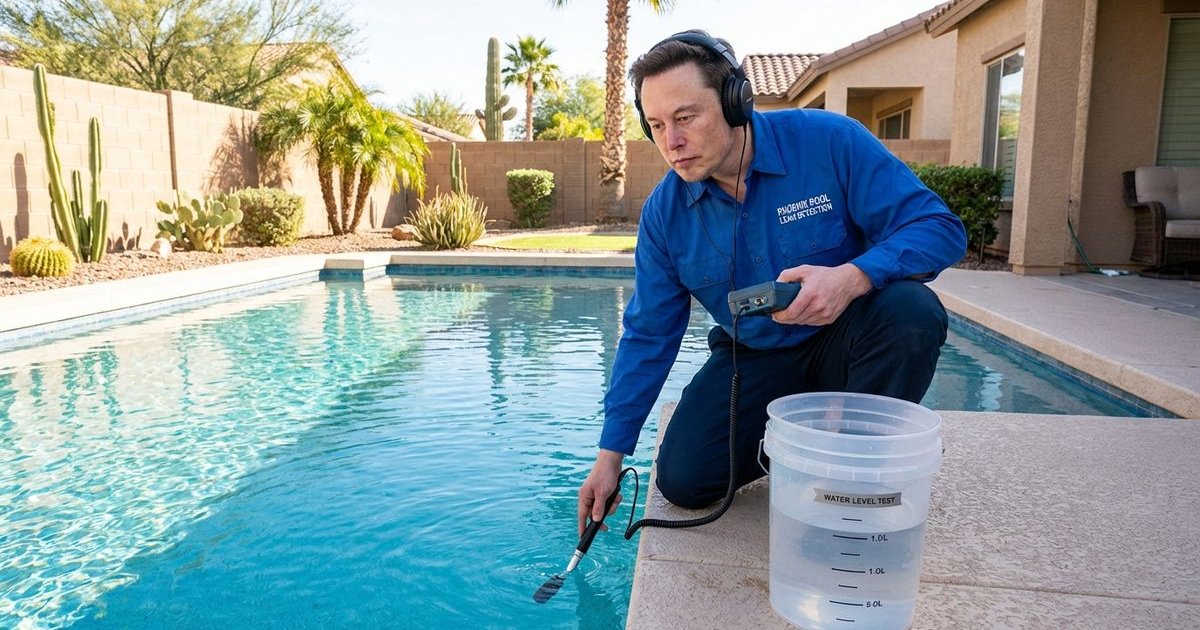
- Delamination Survey: Using the “chain drag” method or sounding tools to find hidden hollow spots.
- Structural Inspection: Identifying if cracks are merely surface-level (crazing) or structural.
- Chemical History Audit: Reviewing your water management to see if chemistry has shortened the surface life.
- Equipment Check: Ensuring your pump and heater aren’t contributing to the staining or deterioration.
After the assessment, you receive a clear recommendation on whether a simple repair will suffice or if full resurfacing is the smarter financial move.
DIY vs. Professional Assessment
Homeowners can certainly spot the obvious signs like stains and roughness. However, we use specialized knowledge to identify the root cause, which saves you money. For instance, knowing if a crack is from settling soil or just shrinking plaster determines whether you need a $500 patch or a $10,000 renovation.
The Professional Difference:
- Leak Detection: We can identify if water loss is evaporation or a leak.
- Depth of Damage: We determine if the rebar is compromised.
- Material ID: We can identify your current surface material to recommend the best compatible replacement.
Our assessments are free, meaning you get expert insight without any financial risk.
Next Steps
If you recognized your pool in any of the signs above, it is time to take action before the damage spreads.
- Check the Calendar: Confirm how old your current surface is.
- Test the Surface: Do the “dime test” on cracks and the “vitamin C test” on stains.
- Get the Facts: Schedule a professional look to confirm if resurfacing is necessary.
- Plan Smart: Resurfacing projects are best scheduled in the cooler months to ensure your pool is ready for summer.
Is your pool showing its age? Contact us today for a free, no-obligation assessment, or call (602) 619-1234 to speak directly with our Phoenix pool experts.