If you own an older pool in the Phoenix area, that single-speed pump is likely the second-largest energy consumer in your home right after your air conditioner.
Most homeowners we talk to are shocked to learn they are paying for power they simply do not need. A pool equipment upgrade can dramatically reduce that cost.
Variable speed pumps can cut that specific energy consumption by up to 90%.
We want to walk you through the real math for Arizona pool owners and explain why this upgrade pays for itself faster than almost any other home improvement.
The Basics: Why Variable Speed Saves
The Problem With Single-Speed Operation
Your current single-speed pump operates on a binary system: it is either off or running at full throttle.
Imagine driving your car with the gas pedal floored at every stoplight and through every school zone.
That is exactly how a traditional 1.5 HP or 2 HP motor works.
Typical single-speed inefficiency:
- Constant High RPM: Runs at 3,450 RPM regardless of the job.
- Energy Waste: Consumes 1,500 to 2,500 watts continuously.
- Excessive Noise: Operates at 65-80 decibels, which is about as loud as a vacuum cleaner.
- Inflexible Runtime: usually requires 8-12 hours daily to turn over the water.
The Variable Speed Advantage
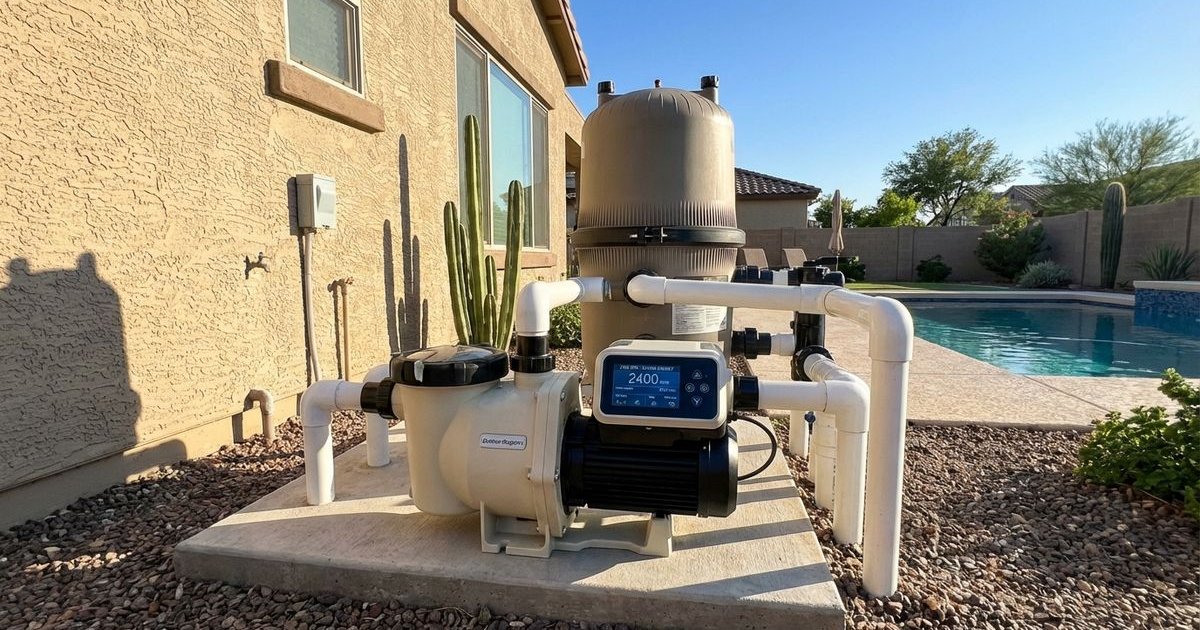
Variable speed (VS) pumps utilize a permanent magnet motor, the same technology found in electric cars like Tesla.
This allows the motor to adjust its speed to match the specific task at hand.
We program these units to run at very low RPMs for basic circulation and ramp up only when necessary for cleaning cycles or water features.
The “Affinity Law” of Physics: Here is the engineering secret that saves you money. Pump energy usage drops drastically when you reduce the speed. If you cut the pump speed by half, the power consumption drops to one-eighth.
Running a pump at 1,725 RPM uses far less than half the electricity of running it at 3,450 RPM.
Real Arizona Savings Calculations
To show you exactly how much a variable speed pool pump can save you, we have broken down the costs using 2025-2026 averages for the Phoenix metro area.
Electricity rates have climbed, making efficiency more critical than ever.
Your Current Costs (Single-Speed)
Assumptions for a standard 15,000-gallon pool:
- Pump: 1.5 HP Single-Speed
- Runtime: 8 hours daily
- Avg Electric Rate: $0.14/kWh (Conservative Phoenix average including taxes/fees)
- Power Draw: 1,800 watts (1.8 kW)
The Monthly Bill: 1.8 kW × 8 hours = 14.4 kWh per day. 14.4 kWh × 30 days = 432 kWh monthly. 432 kWh × $0.14 = $60.48 per month.
Annual Cost: ~$725.00
Variable Speed Costs
Same pool, optimized VS pump:
- Runtime: 12 hours daily at low speed (1,000-1,200 RPM)
- Power Draw: Approx. 150-200 watts
The Monthly Bill: 0.2 kW × 12 hours = 2.4 kWh per day. 2.4 kWh × 30 days = 72 kWh monthly. 72 kWh × $0.14 = $10.08 per month.
Annual Cost: ~$121.00
Your Savings Summary
| Comparison | Single-Speed | Variable Speed |
|---|---|---|
| Monthly Cost | ~$60.50 | ~$10.10 |
| Annual Cost | ~$725.00 | ~$121.00 |
| 10-Year Cost | ~$7,250 | ~$1,210 |
| Total Savings | N/A | $6,000+ |
Payback Period Calculation
Many homeowners hesitate at the upfront price tag, but the return on investment (ROI) is incredibly fast.
Upgrade Investment
Quality equipment has a cost, but it is an investment in infrastructure.
- Variable Speed Pump: $1,300 - $1,800 (Top brands like Pentair or Jandy)
- Professional Installation: $450 - $850 (Includes electrical bonding and plumbing adjustments)
- Total Investment: $1,750 - $2,650
The Break-Even Point
With annual savings of roughly $600, the math is straightforward.
Budget Install: ~2.9 years to break even. Premium Install: ~4.4 years to break even.
After this short period, the pump essentially pays you $50 per month for the rest of its life compared to your old unit.
Factors That Affect Your Savings
Your specific savings might vary based on how you use your pool.
You Will Save Even More If:
- You Have a Larger Pump: Replacements for 2 HP or 3 HP pumps yield massive savings because the old units draw significantly more power.
- You Use a Time-of-Use (TOU) Plan: APS and SRP offer plans where electricity is expensive during peak hours (e.g., 4 PM - 7 PM). We can program your VS pump to run primarily during “super off-peak” hours when power is cheapest.
- You Have Water Features: Waterfalls and spillways require higher flow only when in use. A VS pump ramps up for the show and ramps down for the rest of the day.
Savings May Be Lower If:
- Short Season: If you close your pool for winter (rare in Arizona), annual savings decrease.
- Small Water Volume: Very small play pools require less energy to begin with.
Beyond Energy: Other Benefits
Saving money is the main driver, but the improvement in quality of life is immediate.
Whisper-Quiet Operation
Single-speed pumps are often the source of that annoying background hum in your backyard. Variable speed units running at low RPMs operate at around 45 decibels. This is quieter than a library conversation. You can actually sit by the pool equipment and have a normal chat without raising your voice.
Advanced Filtration and Clarity
It seems counterintuitive that slower water cleans better. Water moving slowly through your filter media (sand, cartridge, or DE) allows the filter to trap finer particles. High-speed water often forces debris right through the filter grid and back into the pool. Low-speed circulation runs for more hours a day, keeping the water constantly moving and polished.
Equipment Longevity
Running at lower speeds reduces vibration and heat. This puts less stress on the motor, seals, and your plumbing joints. Pumps like the Pentair IntelliFlo3 or Hayward TriStar VS are built to last longer because they aren’t sprinting a marathon every single day.
Compliance With Federal Law
The Department of Energy (DOE) implemented regulations in 2021 that effectively banned the manufacturing of most single-speed pumps for filtration. If your old pump fails, you will likely be required to upgrade to variable speed anyway. Getting ahead of a catastrophic failure allows you to choose the installation date rather than scrambling during a heatwave.
Utility Rebates and Incentives
Arizona utility providers want you to reduce load on the grid.
SRP (Salt River Project): They frequently offer instant rebates or bill credits for installing ENERGY STAR® certified pool pumps. These can range from $100 to $400 depending on the specific promotion and pump horsepower.
APS (Arizona Public Service): Rebate programs here can be seasonal. We always recommend checking the current “APS Marketplace” or efficiency rebate portal before purchasing.
Securing a rebate can sometimes knock an additional six months off your payback period.
Real Customer Example
Here is a recent project we completed for a family in Chandler.
The Situation:
- 18,000-gallon play pool.
- Old 2 HP “screamer” pump running 10 hours a day.
- Homeowner complained of noise and high summer bills.
The Results After Upgrade:
- Installed a Pentair Variable Speed Pump.
- Programmed schedule: 14 hours at low speed (1,100 RPM), 2 hours at med-high for cleaning.
- Previous Bill Contribution: ~$92/month.
- New Bill Contribution: ~$34/month.
The Financial Win: They are saving $696 per year. With a $300 utility rebate, their system will pay for itself in just under 2.5 years.
Ready to Start Saving?
We know that math implies you are leaving money on the table every month you wait.
Assessing your current setup is the first step toward a quieter backyard and lower bills.
We can inspect your current equipment, calculate your specific flow requirements, and provide a clear estimate on how much can a variable speed pool pump save you.
Contact us or call (602) 619-1234 for a free consultation.